

5 Ways to Enhance Sheet Rubber
Finishes, Inserts, Marking, Colors & Slitting
By Cody David & Alvaro Lopez
In our previous article, How is Sheet Rubber Made?, we covered the process of how sheet rubber is compounded, mixed and calendered to exhibit the exact dimensions, key chemical resistances, and specific physical properties required by the final application – but there’s more!
There are a number of key enhancements that can further heighten performance and improve yields. In this article, we’ll provide a working understanding of what these enhancements are and how they are achieved. These 5 features include:
- Surface Finish
- Fabric Inserts
- Branding & Text Marking
- Color Matching
- Slitting & Trimming

1. Surface Finishes
The surface finish on rubber sheets can vary from smooth to textured, depending on the functional performance, grip, or desired appearance. When utilizing a calender to manufacture sheet rubber, the surface finish is achieved by applying a carrier that embosses the uncured rubber with the desired texture.
Each finish serves a specific purpose based on the application.
Smooth Finish
A flat, uniform surface that is free of any textures, patterns, or irregularities. The most common choice for sheet rubber products with benefits that include:
- Enhanced sealing ability via tight and uniform contact with surrounding materials.
- Smooth surface creates a vacuum-like seal, useful in flat gasketing applications.
- Improves effectiveness & coverage of adhesives that prefer bonding to a flat surface.

Fabric Finish
A textured surface mimicking the slightly rough, patterned appearance of woven fabric. For applications requiring handling, many end users prefer a fabric finish to improve grip. The benefits include:
-
Patterned surface reduces slippage when in contact with liquids.
- Provides for easier releases when parts need to be replaced.
- Textile feel provides for both easy identification and aesthetic appeal.
- Improves effectiveness & coverage of adhesives that prefer bonding to a patterned surface.

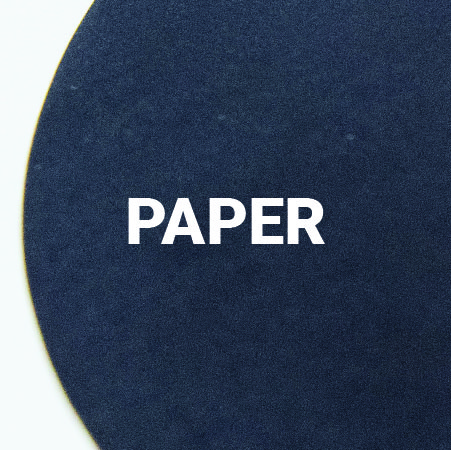
Paper Finish
A flat, uniform surface with a non-reflective appearance, also free of any textures, patterns, or irregularities. Especially effective for die cutting manufacturing.
- Enhanced effectiveness of clean die cuts by reducing sticking.
- Reduces the need for powders for processing and roll layer separation.
- Aesthetic alignment with application requirements.

2. Cloth Inserts
Cloth Inserted, or CI, sheet rubber has become the industry standard for applications requiring enhanced dimensional stability and durability. A cloth insert is installed between rubber. This process can be repeated multiple times, with each ply improving functionality and performance. For increased plies and thicknesses beyond the capabilities of calendering, molded sheets may be an option. Ultimately, the choice of insert and number of plies will be dependent upon the individual customer requirements.
Adding a cloth insert, regardless of material type, will increase the dimensional stability, durability and tensile strength of finished sheet rubber goods. The following four substrates have emerged as the materials of choice for reinforced sheet rubber:
Cotton
Natural cotton fibers either woven or non-woven into a textured sheet.
- Improved strength and durability via a more even distribution of pressure.
- Better maintenance of size and shape even under mechanical stress, high temperatures, or extended exposure to environmental conditions.
- Suitable for applications requiring increased moisture retention.

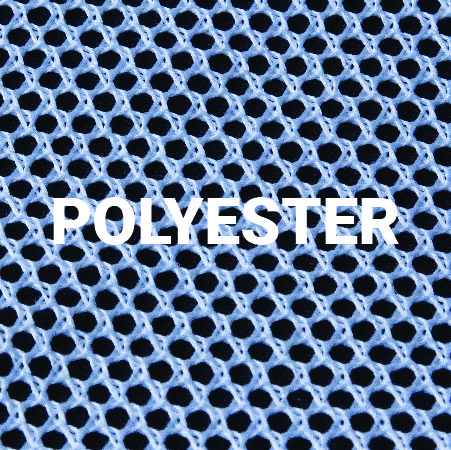
Polyester
A blend of petroleum based synthetic fibers provided into a textured sheet.
- Inherent wicking properties.
- Better heat resistance when compared to other inserts.
- Improved chemical resistance due to polyester’s increased resistance to oils, solvents and acids.
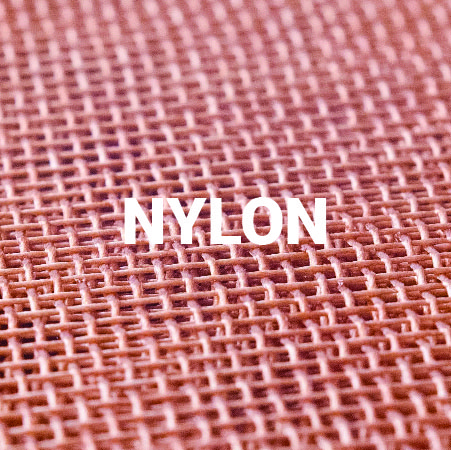
Nylon
A layer of synthetic nylon fabric with a woven or non-woven structure.
- Sound dampening characteristics.
- Additional reinforcement is ideal for high pressure applications.
- Improved temperature insulation properties.
Fiberglass
A subset of cloth, made from fiber strands of glass fibers either woven or non-woven.
- Ideal for load bearing applications.
- High temperature resistant material.
- Enhances silicone’s physical properties such as excellent abrasion and wear resistance high performance material.

One distinguishing characteristic of cloth inserts is that each are available as either an open weave or a closed weave. Closed weave inserts are often treated and create a chemical bond with the rubber. Open weave inserts allow for better integration with rubber by the design and will form both a chemical and mechanical bond. While the choice of weave ultimately depends on the application’s requirements; generally, an open weave will create a stronger bond.

3. Branding, Marking & Stenciling
Branding and text marking on sheet rubber involves adding text, numbers, or simple imagery directly onto the surface of the rubber. These characters can include part numbers, use by dates, safety instructions, or other relevant information. Among the various stamping and imprinting systems available, a common approach is using a marking wheel with predefined lettering, paired with consistent ink application, to mark the rubber.
Marking can be used for:
- Identification: Text marking allows easy identification of rubber components, which is useful for specification adherence or maintenance and replacement purposes.
- Branding: Adding logos, company or product names enhances brand visibility.
- Compliance Information: Specifications and key compliances which the material adheres are often listed on the actual material, which can be a critical requirement in high-risk environments.
Marking is often employed in the automotive and aerospace industry where rubber plays a crucial role to the ultimate performance and overall safety of the finished part. Knowing the current revision of a specification for a key part or being able to quickly identify where to source critical material can be a huge benefit for end users and original equipment manufacturers (OEMs).

4. Colors
Many sheet rubber manufacturers tend to avoid offering custom colors as it can create additional layers of complexity to the scheduling and maintenance process; however, those who have the ability to overcome these hurdles provide a key feature for an expansive number of applications.
Manufacturing colored sheet rubber begins with compounding, where a formulation is adjusted utilizing a pigment agent in order to achieve the desired color. Using the Pantone Matching System, certain manufacturers can offer customized colors that likely are not available in standard rubber offerings.
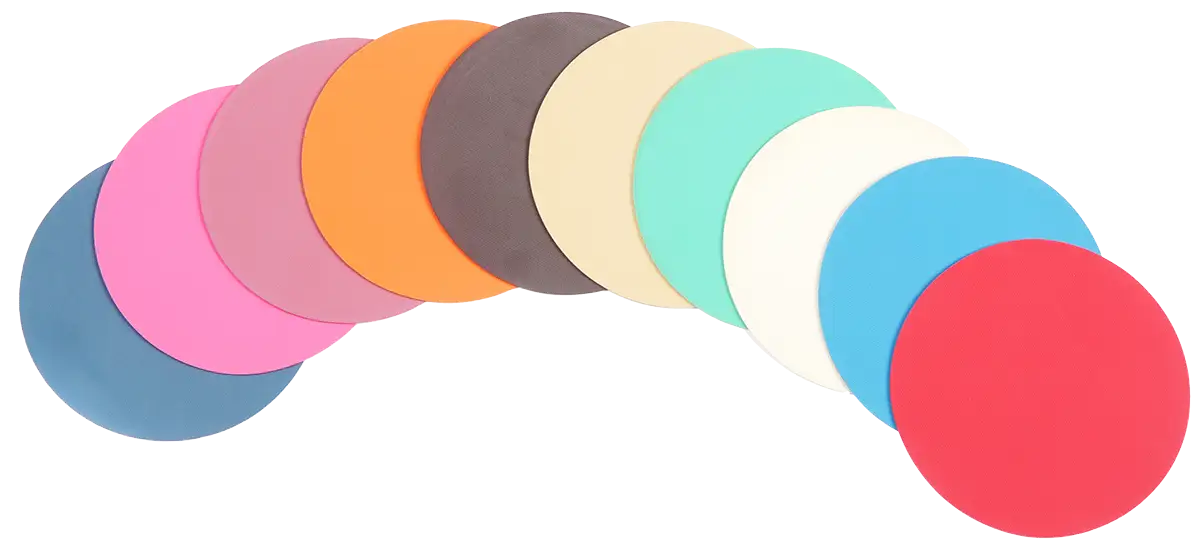
The benefits extend beyond mere aesthetics:
- Identification: Using bright colors like red or orange can allow for easy identification of high value, particularly critical or potentially dangerous materials.
- Non-Marking: Some black rubber products have the tendency to leave a dark mark or smudge under pressure and motion. Colored rubber can be compounded to have non marking quality, leaving your personnel and machinery clean of stains.
- Application or Branding Requirements: From using a light white to limit heat absorption or aligning with the end user’s aesthetic preferences, colors unlock an expansive range of opportunities in meeting your exacting requirements.
It is important to know that some color agents can inhibit or enhance certain physical properties or resistance values in the rubber material. It is important to consult with a rubber manufacturer when choosing different shades.
5. Slitting & Trimming
Slitting & trimming can be a crucial element of success for a number of applications. Trimming generally refers to cutting irregular edges from a calendered roll. Slitting refers to the cutting of sheet rubber rolls into short coils or narrower rolls. There is a wide variety of methods used to trim and slit calendered rolls into multiple coils. One approach involves using a rewinder slitter, which processes a master roll of sheet rubber. The material is fed into the machine, where rounded blades crush-cut or score it into strips as narrow as 1 inch. These strips are then rewound into coils and discharged from the back of the machine.
The result is especially critical for gasket fabricators that rely on die cutting to produce their parts. In their processes, the sheet rubber must be able to fit within the width of their machinery and cannot extend over the sides or provide excess scrap. If a rubber manufacturer provides overly wide material, gasket cutters & converters have to take on extra cost in slitting the rolls down themselves.
A sheet rubber manufacturer, equipped with full-service trimming and slitting capabilities, allows the fabricator to optimize their production by preventing extra work and reducing their scrap.

Any More Questions? Reach Out!
Customizing sheet rubber through finishes, inserts, marking, colors, and precise trimming or slitting provides essential value-added options that enhance performance and meet specific application needs. These features offer flexibility in appearance, durability, identification, and functionality, making sheet rubber materials highly adaptable for various industrial uses. By leveraging these enhancements, manufacturers and end-users can achieve optimized solutions tailored to their unique requirements.
Unlike many other sheet rubber manufacturers who are dependent upon external laboratories and testing facilities, WARCO develops, compounds, mixes, thoroughly tests and produces your rubber product in a single facility. Our wealth of experience in material design, cataloged formulations and multi-disciplined manufacturing capabilities, unique flexibility, and tight control over each step-in production, are among the key contributors to how WARCO became America’s Choice for Quality Rubber.
This is the fifth article of our new series, Stretching the Imagination: Ideas to Innovation, where we break down the major steps of rubber production. Stay informed of the latest articles by signing up for our newsletter at warco.com.
If you have any questions, email your questions to sales@warco.com, or contact us directly at (714) 532-3355.


